

Sync-Guard, Trans-Guard, and Other Features

Learn the importance of Sync-Guard, Trans-Guard, missing cycle detection, and more.


3 min read

Control Concepts has pioneered several features for SCR power controllers to improve safety, reduce complexity, and allow greater visibility for monitoring and alarms.

Sync-Guard

Control Concepts created this feature to decrease the possibility of synchronous operation of two or more controllers. It reduces the variations in power demand, which results in a more stable supply voltage and improved power factor. Sync-Guard does not alter the power applied to the load, but adjusts the time when power is applied in such a manner as to reduce the possibility of the controllers being ON and OFF at the same time.

Trans-Guard

The use of Zero Cross controllers on the secondary of a transformer can cause saturation of the transformer, which results in excess transformer temperatures and early failure.

Transformers can be caused to saturate if a DC voltage is applied to the primary. DC voltage can be induced on the primary by DC components in the secondary. A simple half wave rectifier circuit will induce a DC voltage on the primary because the voltage drop across the source resistance (during the half cycle the diode conducts) will lower the primary voltage. The effect is the same as if a Zero Cross controller were not providing an equal number of positive and negative half cycles to the load. The source inductance can also cause a DC voltage to occur on the transformer primary.
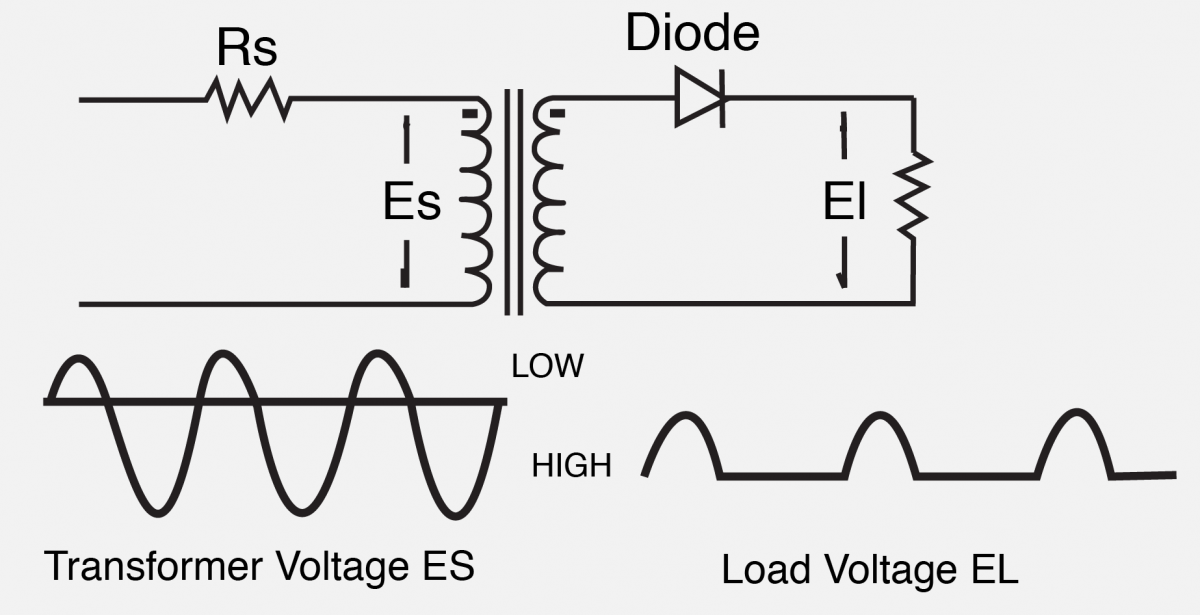
Transformer Saturation Due to Secondary DC Current

The Trans-Guard feature eliminates these problems by always supplying an odd number of ON half-cycles and an even number of OFF half-cycles. This technique guarantees that no DC voltage will occur independent of the source impedance or the load configuration.

The saturation problem is not likely to occur when the load is a small percentage of the transformer capacity, or when the source resistance and inductance are small. However, the potential problem always exists unless the controller is designed with Trans-Guard.

Soft Start & Missing Cycle Detection

These features are required in Phase Angle control to insure that the load power is gradually increased from zero to the value set by the command signal if load power is interrupted. This gradual increase of power prevents surge currents and avoids the possibility of saturating inductive loads like transformers.

Current Limiting

This feature, available only on Phase qngle controllers, prevents the load current from exceeding a preset value. Current limiting is used to protect the load, the SCR power controller, fuses, and the system supply from large surge currents that could occur at start up due to loads that have a low resistance when cold.

Feedback/Feed forward

Either feedback or feed forward provides the means to achieve a linear relation between the desired output and the control or command signal. Feedback implies that the desired parameter is measured and “fed back” to the input of the control such that the output can be increased or decreased if corrective action is required. Feed forward involves a less expensive technique in which the output is simulated in the circuitry and corrective action is taken based upon the simulated circuit response. Both techniques provide a linear output with respect to the control or command signals and eliminate the effects of load and supply variations.

Overcurrent Trip

The Overcurrent Trip feature prevents the SCRs from being turned on if the SCR current has exceeded a preset value during the last half cycle. This feature is an electronic fuse that eliminates the need for expensive and troublesome semiconductor fuses. The controller can be reset by either removing and re-applying power or by momentarily closing a remote switch. This feature has proven to be a more reliable protection technique than fast acting fuses.

Shorted SCR Detection

If an SCR does fail, it typically becomes shorted, allowing load current to flow continuously. In the event an SCR shorts, this feature energizes a relay which can be used to activate an alarm or remove system power.

Choosing the Right Features for Your Application

Depending on the application, these SCR power controller features may be critical elements in your system. Control Concepts has a team of experts on standby to help you choose the features you need to ensure safe, reliable power control for your system.


Control Concepts has pioneered several features for SCR power controllers to improve safety, reduce complexity, and allow greater visibility for monitoring and alarms.

Sync-Guard

Control Concepts created this feature to decrease the possibility of synchronous operation of two or more controllers. It reduces the variations in power demand, which results in a more stable supply voltage and improved power factor. Sync-Guard does not alter the power applied to the load, but adjusts the time when power is applied in such a manner as to reduce the possibility of the controllers being ON and OFF at the same time.

Trans-Guard

The use of Zero Cross controllers on the secondary of a transformer can cause saturation of the transformer, which results in excess transformer temperatures and early failure.

Transformers can be caused to saturate if a DC voltage is applied to the primary. DC voltage can be induced on the primary by DC components in the secondary. A simple half wave rectifier circuit will induce a DC voltage on the primary because the voltage drop across the source resistance (during the half cycle the diode conducts) will lower the primary voltage. The effect is the same as if a Zero Cross controller were not providing an equal number of positive and negative half cycles to the load. The source inductance can also cause a DC voltage to occur on the transformer primary.

Transformer Saturation Due to Secondary DC Current

The Trans-Guard feature eliminates these problems by always supplying an odd number of ON half-cycles and an even number of OFF half-cycles. This technique guarantees that no DC voltage will occur independent of the source impedance or the load configuration.

The saturation problem is not likely to occur when the load is a small percentage of the transformer capacity, or when the source resistance and inductance are small. However, the potential problem always exists unless the controller is designed with Trans-Guard.

Soft Start & Missing Cycle Detection

These features are required in Phase Angle control to insure that the load power is gradually increased from zero to the value set by the command signal if load power is interrupted. This gradual increase of power prevents surge currents and avoids the possibility of saturating inductive loads like transformers.

Current Limiting

This feature, available only on Phase qngle controllers, prevents the load current from exceeding a preset value. Current limiting is used to protect the load, the SCR power controller, fuses, and the system supply from large surge currents that could occur at start up due to loads that have a low resistance when cold.

Feedback/Feed forward

Either feedback or feed forward provides the means to achieve a linear relation between the desired output and the control or command signal. Feedback implies that the desired parameter is measured and “fed back” to the input of the control such that the output can be increased or decreased if corrective action is required. Feed forward involves a less expensive technique in which the output is simulated in the circuitry and corrective action is taken based upon the simulated circuit response. Both techniques provide a linear output with respect to the control or command signals and eliminate the effects of load and supply variations.

Overcurrent Trip

The Overcurrent Trip feature prevents the SCRs from being turned on if the SCR current has exceeded a preset value during the last half cycle. This feature is an electronic fuse that eliminates the need for expensive and troublesome semiconductor fuses. The controller can be reset by either removing and re-applying power or by momentarily closing a remote switch. This feature has proven to be a more reliable protection technique than fast acting fuses.

Shorted SCR Detection

If an SCR does fail, it typically becomes shorted, allowing load current to flow continuously. In the event an SCR shorts, this feature energizes a relay which can be used to activate an alarm or remove system power.

Choosing the Right Features for Your Application

Depending on the application, these SCR power controller features may be critical elements in your system. Control Concepts has a team of experts on standby to help you choose the features you need to ensure safe, reliable power control for your system.
Email Address *